
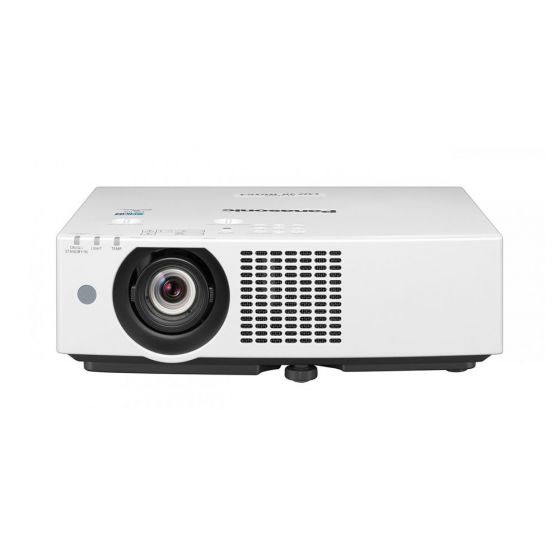
How LCD Projectors Operate
0 Comments | 24/11/2022 | 01:01 PM | 12 | 4 minute readThere's a good chance an LCD (liquid crystal display) projector is behind the light show, whether you're sitting through a sales pitch, giving a presentation in class, or enjoying an evening of blockbuster thrills in your home theater.
Despite being almost 30 years old in 2012, LCD projector technology is still one of the most popular choices for digital projection, along with Digital Light Processing (DLP) projectors. The first LCD projector was created in 1984 by inventor Gene Dolgoff, and modern projector manufacturers Epson and Sony still use the technology.
The old film projection technique was straightforward: Each frame of the film was a tiny, translucent photograph. You could project a larger version of that tiny image onto a wall or screen by shining light through the film and then having that light pass through an imaging lens.
LCD projectors operate slightly differently. Instead of passing through a frame of translucent film, a beam of high-intensity light traverses thousands of moving pixels in an LCD display. Additionally, these projectors use three LCD displays instead of just one, which is why they are also known as 3LCD projectors. To create the clear, vivid image that is projected on the screen, the light splits into three hues, travels through three LCDs, and then is combined with itself once more in a prism.
Does that still sound like magic? Let's take a gentler, step-by-step approach and go from the bulb to the large screen.
So go ahead and pop some popcorn. Lie back comfortably in your chair. Put your phone away and get ready to start some light.
3LCD: Breaking the Light Fantastic
It's important to start at the very beginning, with a light beam, and conclude on the actual movie screen to comprehend how an LCD projector operates.
Step One: A strong light source releases a bright, white beam of light.
Step two: Our white light beam reflects off a set of mirrors, including two dichroic mirrors, that are covered in a special film that only reflects a particular wavelength of light. You're aware of how a prism or a drop of water can split a light beam into various wavelengths or create a rainbow of colors? Here, the same idea is used, but each dichroic mirror only emits light of one particular wavelength. As a result, when the white light strikes the mirrors, each one reflects a red, green, and blue beam of light that passes through the projector.
Step three: Each of the three light beams—red, green, and blue—passes through a liquid crystal display made up of countless tiny pixels. For a more thorough explanation of LCD technology, see How Liquid Crystal Displays Work. LCDs use tiny, colourless pixels that, when activated by an electric current, either block or permit light to pass through. The same image or moving images are shown on all three of the projector's LCD screens, but they are all only in grayscale. These three screens display three different depictions of the same scene when coloured light passes through them: one in tinted red, one in tinted green, and one in tinted blue.
Step four: Of course, the final image we perceive is full colour and not just red, green, or blue. In order to create a single image made up of millions of hues rather of just three, the three coloured copies of this scene are recombined within the LCD projector in a dichroic prism (a skillfully built arrangement of four triangular prisms).
Step five: After that, a projector's lens transfers the scene's vivid, multicoloured light on the large screen.
Really, that's all there is to it. But what are this technology's benefits and drawbacks?
The Ups and Downs of LCD Projectors
What can an LCD projector achieve that its competitors who also use projectors cannot? You don't have to worry about the movie deteriorating, to start. LCD projectors are dependent on external data from a computer (connected via USB) or data from a DVD that has been loaded. When you play back the film for the first time or the a hundredth time, the digital images supplied to the three LCD panels are just as clear. Intense visual detail is possible on the three LCD screens while using 25% less power than competing digital projector technologies [source: 3LCD].
Contrary to the other common digital projection technology we mentioned, Digital Light Processing (DLP) projectors, LCD projectors don't experience the "rainbow effect," or colour flashes brought on by the spinning colour wheel inside DLP projectors. Sharper pictures are made possible by LCD projectors' better contrast.
The premium, professional projection market, however, is still dominated by DLP projectors. When you see a movie in a large theatre, a DLP projector that costs more than $35,000 will be lighting up the screen. While the price of an LCD projector can range from $200 to $9,000, LCD projectors are more expensive.
Like any technology, LCD projectors need some maintenance and care. Although the quality of the film won't deteriorate with use, individual pixels can burn out and lower the quality of the image. On LCD screens, dust particles can amass and smear the image.
Check to see what kind of projector is being used the next time you watch a movie at home or at the office. Just picture the three tiny grayscale screens inside an LCD projector and the combined light beams that bring everything to colourful life.
Author's Note
My preference for movies on screens tends to outweigh my interest in the technology that got there, but I have to say that the optical trickery within these projectors truly amazed me. A Gelfling's mojo could be taken away by the Skeksis using the concept of dichroically reflected light and recombined triple pictures, which has a very ethereal feel to it.
I've experimented with one of these to display photographs at events and art exhibitions, and the image is in fact pretty clear and colourful. Furthermore, as mentioned in the article, the average cost is far more affordable than the sum of money required to purchase a DLP projector of professional-grade.
references: https://electronics.howstuffworks.com/lcd-projectors.htm

Robert Lamb
No Comments found for this post !
You may also like
No popular post found !

How to clean a laptop keyboard?
0 Comments 01/07/2023 10It’s slightly more complicated to clean a laptop...


How to clean Monitors?
0 Comments 01/07/2023 16Cosmetic damage on the casing is one thing, but if...
Peripheral Maintenance and Tips
0 Comments 01/07/2023 9In this article, we'll provide maintenance tips an...

The Essential Guide to Keyboards
0 Comments 01/07/2023 153Keyboards are the primary input devices for most c...



















Leave a comment