
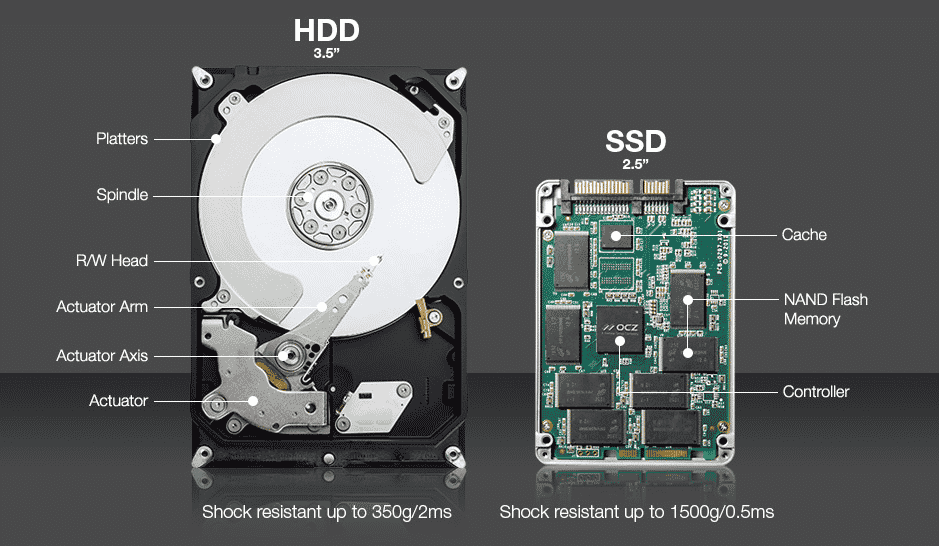
HDD VS SSD "Whats the Different?
0 Comments | 09/06/2023 | 03:34 PM | 10 | 1 minute readHDDs are traditional storage devices with spinning platters that read and write data. SSDs use newer technology that stores data on instantly accessible memory chips. SSDs are faster, quieter, smaller, consume less energy, and more durable. HDDs are cheaper, have more storage capacity, and offer easier data recovery if damaged.
The main difference between a solid state drive (SSD) and a hard disk drive (HDD) is how data is stored and accessed. HDDs use mechanical spinning disks and a moving read/write head to access data, while SSDs use memory chips. If price isn’t an issue, SSDs are a better option — especially since modern SSDs are just about as reliable as HDDs.
Until the late 2000s, when you bought a new hard disk drive or personal computer, your hard disk storage choices were limited to size and speed — perhaps 5,400 or 7,200 rotations per minute. Today, when you buy a new PC, you have two very different options: you can get one with an SSD or one with an HDD.

Ordejela
No Comments found for this post !
You may also like
No popular post found !

How to clean a laptop keyboard?
0 Comments 01/07/2023 10It’s slightly more complicated to clean a laptop...


How to clean Monitors?
0 Comments 01/07/2023 16Cosmetic damage on the casing is one thing, but if...
Peripheral Maintenance and Tips
0 Comments 01/07/2023 9In this article, we'll provide maintenance tips an...

The Essential Guide to Keyboards
0 Comments 01/07/2023 153Keyboards are the primary input devices for most c...















Leave a comment